As you know, Microsoft Dynamics 365 applications such as Finance & Operations, Customer Engagement, Field Service, Sales and Marketing etc are individually one of the best products in the current market. However, these applications are not interconnected and integrating these applications takes significant cost and time. Therefore, ‘One Dynamics One Platform’ is Microsoft’s vision & initiative to integrate these applications out of the box over the journey of next few years.
The main beneficiaries of ODOP will be Developers, Administrators, Business Users & Analysts.
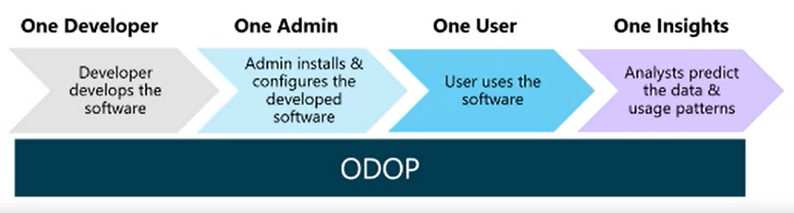
One Admin
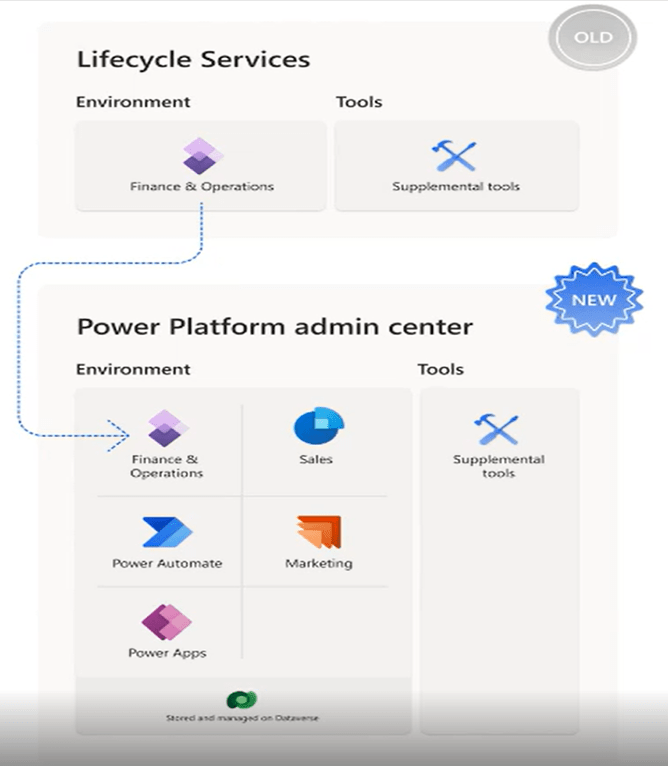
Currently, Administrators uses different platforms to manage different Dynamics 365 applications such as LCS for managing Finance & Operations (D365 F&O), Power Platform admin center for Power Apps, Power Automate, and customer engagement apps (Dynamics 365 Sales, Dynamics 365 Customer Service, Dynamics 365 Field Service, Dynamics 365 Marketing, and Dynamics 365 Project Service Automation). To make administrators more productive and efficient, Microsoft will be moving D365 F&O administration also to Power Platform admin center. There will be one platform to manage all dynamics 365 applications. It’s easier said than done due to complexity, therefore, it will be take couple of years to achieve ODOP.
One Developer
F&O Developers uses X++ in Visual Studio IDE and CE application developers uses different toolsets. Building a cross application functionality makes Developers less productive as they have to switch across applications and learn different toolsets. Under ODOP vision, Microsoft aims to provide similar tools & development concepts across applications so Developers can focus on their core strengths. Now, we have Power Platform Tools for Visual Studio which supports the rapid creation, debugging, and deployment of plug-ins.
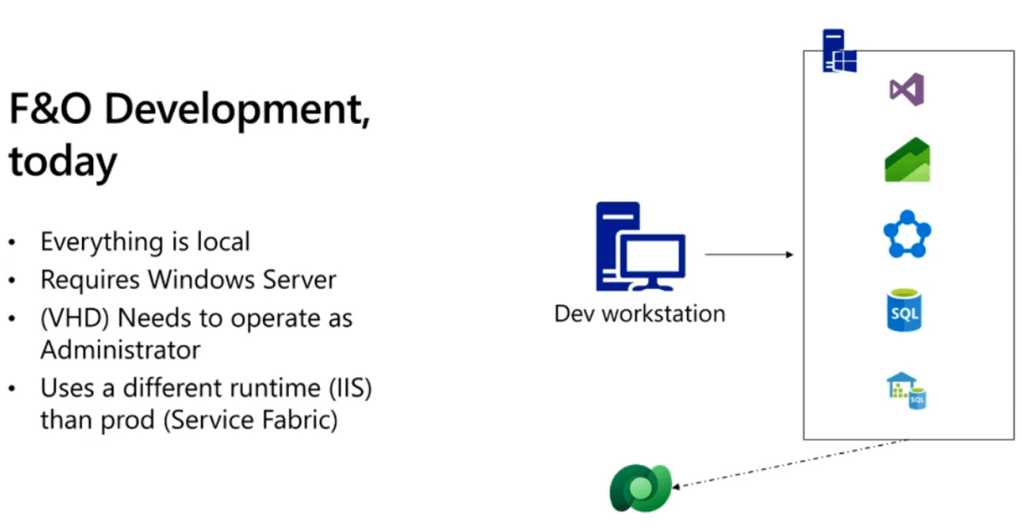
Microsoft’s Vision for Future State
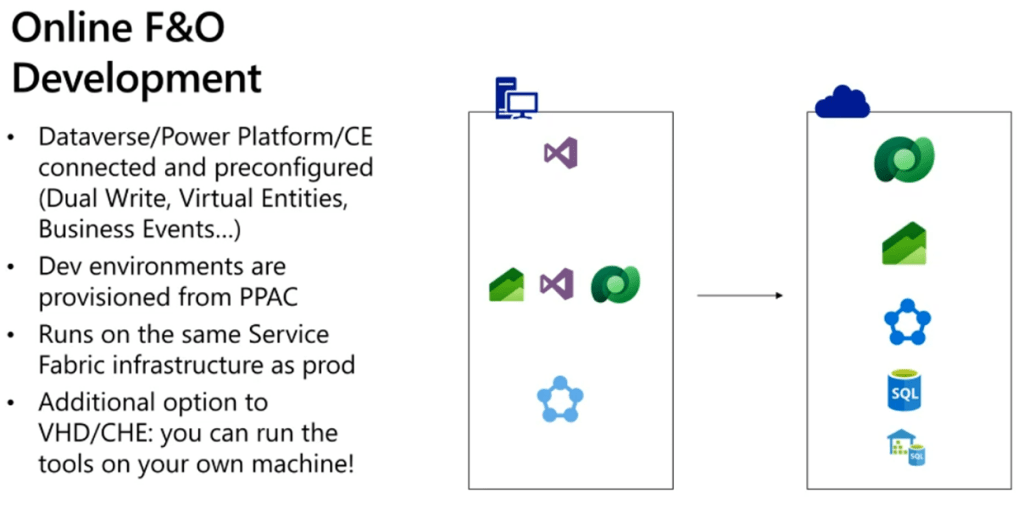
One User
To work on multiple Dynamics 365 applications, one must switch across the applications. These applications have different user interfaces and need time and efforts to get accustomed to the look and feel of the application. With One Platform One Dynamics vision, Microsoft aims to provide consistent user experience in terms of UI and runtime.
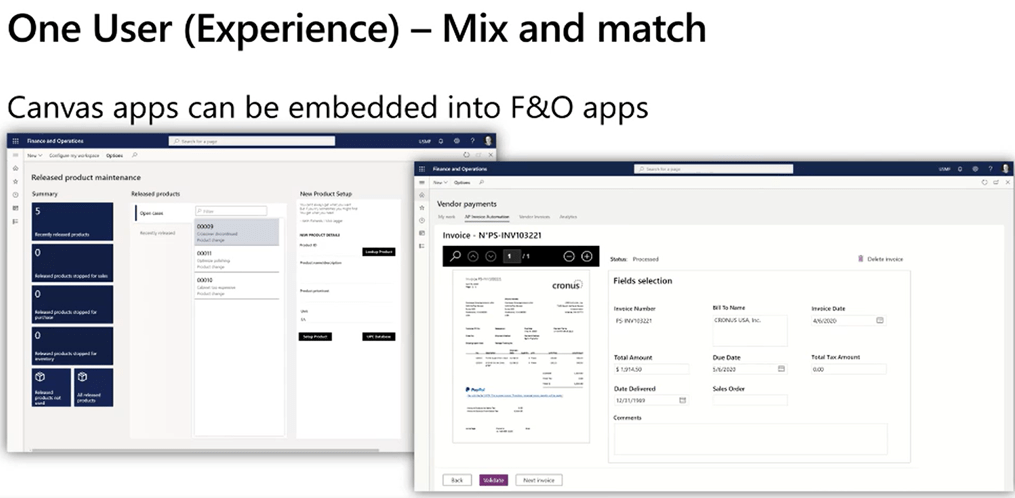
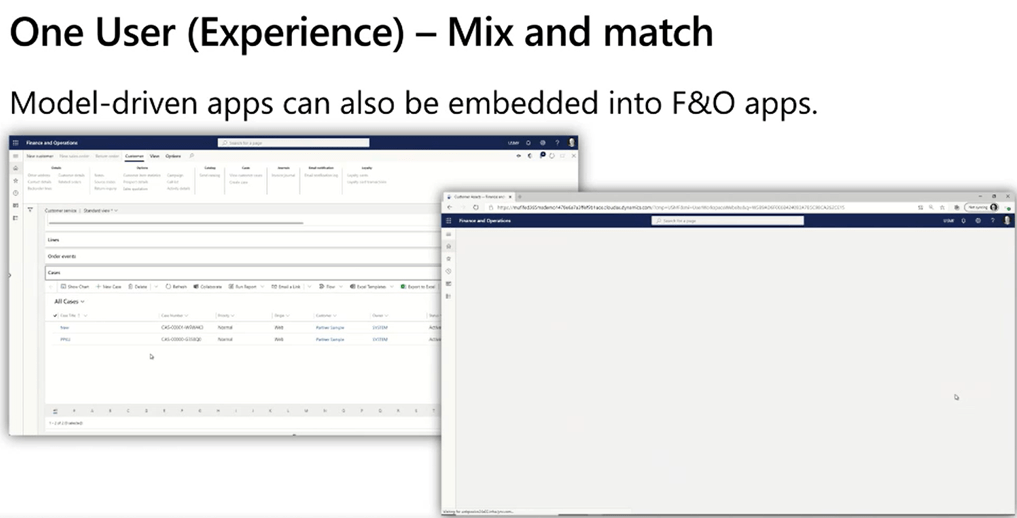
From application version 10.0.29, Model Driven apps can also be embedded in F&O.
One User Runtime is about handling business data during runtime and creating end to end business process orchestration between front and back offices using 4 ODOP capabilities namely Dual-Write, data events, virtual tables, and business events. Using these capabilities, we can access data across applications such as accessing F&O data in Power Apps via Virtual tables in Dataverse. Now, the data structure of F&O and CE applications are different. For instance, we have legal entity concept in F&O but Business Unit concept in CE. Microsoft has covered some of those gaps and will be working on it under this vision.
One Insights
There is no doubt that reporting & analytics play crucial role for every business. One Insights is Microsoft’s vision to make it simpler and more effective to work with data. Azure Synapse will become more powerful as the integration with Azure Synapse and Power BI will get stronger and Synapse link for Dataverse will get better.
Finance & Operations Entities will be selected directly in Azure Synapse and those entities will be available to use in Azure Synapse Analytics workspace. This feature is in private preview. Like Data entities, Microsoft has plans to include F&O tables in Azure Synapse in future. Query performance will be faster with parquet and Delta Lake formats. Also, parquet compresses the data in lake so you will be costs of storage and query will be reduced.
Key Take-aways
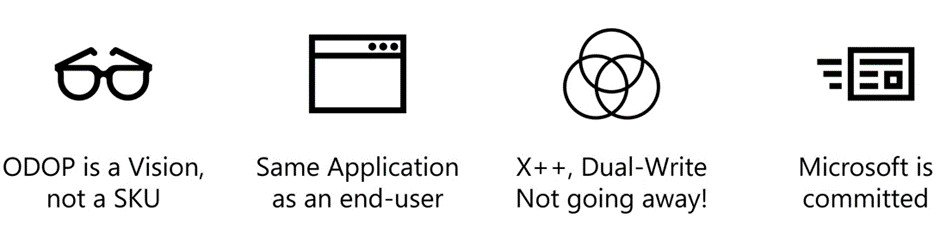
Microsoft has provided demo of current options available under this vision in a Tech Talk. To gain more insights please go through the recording from below link.
 MOHIT RAMPAL - DYNAMICS 365 F&O BLOG
Leave a comment